New Research
A Small Trial Compared Algae-Oil Soymilk With Capsules for Short-Term EPA and DHA Uptake
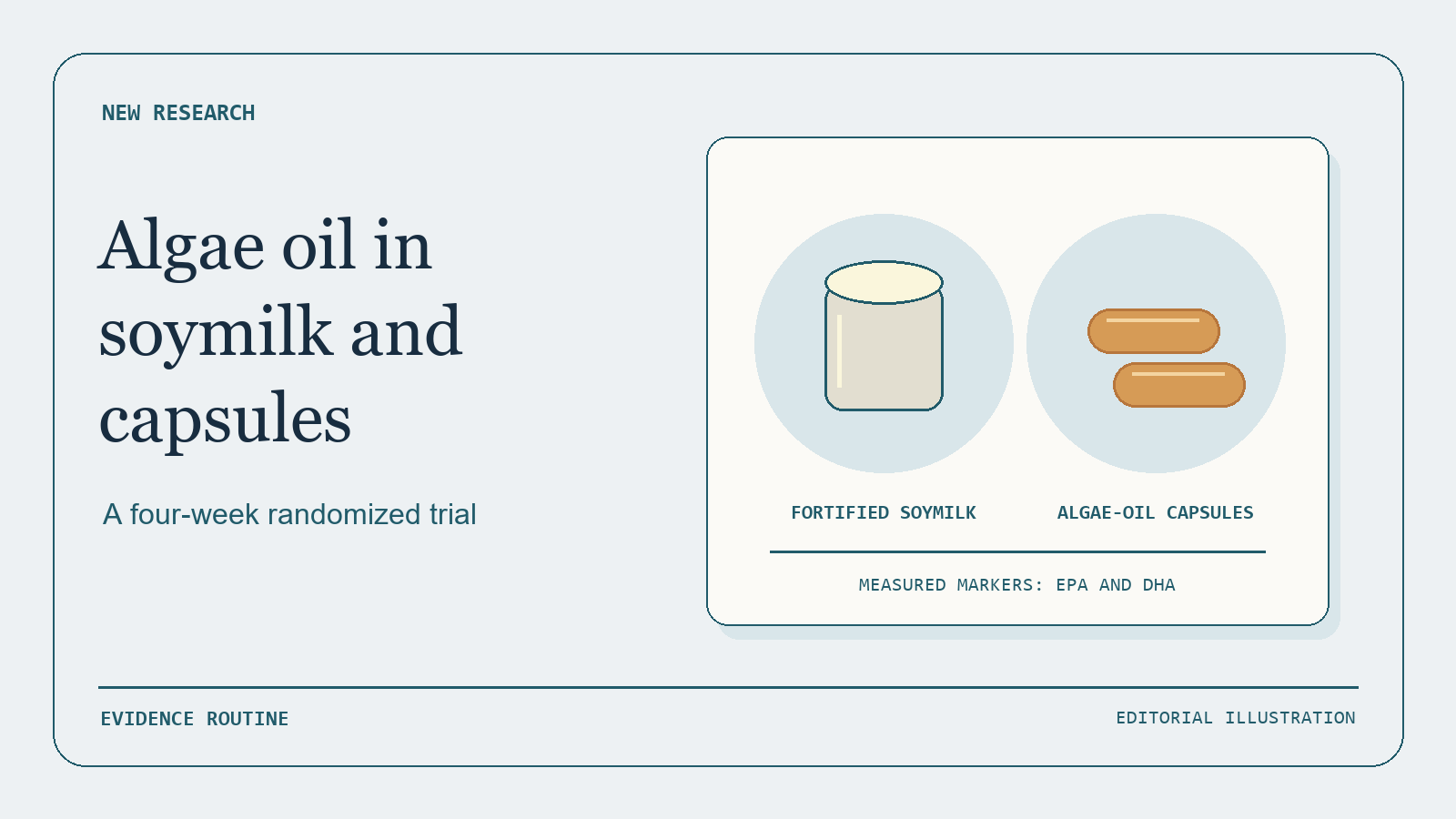
In a four-week open-label trial of 21 healthy adults, both an algae-oil-fortified soymilk and algae-oil capsules increased EPA and DHA in blood measures. After accounting for intake and adherence, the study found no significant difference in accumulation between formats.
New Research · 9 November 2026 · Primary source: Angelotti et al., Food & Function; trial record: NCT05802797.
A four-week randomized parallel trial compared two ways of consuming algae-derived EPA and DHA: an algae-oil-fortified soymilk drink and algae-oil capsules. Twenty-one healthy adults completed the open-label study. The beverage supplied 200 mg EPA and 320 mg DHA daily; the capsule group received a closely matched 230 mg EPA and 380 mg DHA dose.
What the researchers measured
The primary outcome was the change in EPA and DHA in red blood cells. The team also measured plasma and peripheral blood mononuclear-cell fatty-acid profiles. Both groups showed increases in EPA and DHA across the measured compartments over the intervention.
Before adjustment, the capsule group had a larger increase in some DHA measures. But the two formats did not differ significantly for EPA or DHA accumulation after the analysis accounted for the small dose difference and recorded adherence. That result supports a narrow conclusion: under this study’s conditions, the beverage and capsules produced broadly comparable short-term changes in the measured biomarkers.
What this does not establish
Biomarker uptake is not the same as a clinical outcome. The study did not test whether either format changes disease risk, symptoms, or long-term health. It also does not establish that one brand, food, or capsule will perform the same way as the study products.
The design was small, short, and open-label, with healthy adults rather than a clinical population. The investigators also used a completer-only analysis, so the results should be read as preliminary rather than as a decisive format comparison.
For readers comparing omega-3 studies, the useful detail is the actual EPA+DHA dose and the outcome measured—not simply whether the source was a drink or a capsule. Read the original paper record and the trial registration for the full methods and study record.